



Save  
Password?  |  Join
open
Upgrade to a better browser, please.

Older Posts

Jonathan McDonald Scott Pilgrim vs. The World

[This review was originally published on my blog The Photo Play.]

Imagine, if you will, a world in which video game fights are very real, and interrupt the normal flow of life much like songs in a musical, sweeping the world along into its bizarre unreality until it is completed, at which point life and the world return to normal. That is the bare minimum of what the viewer will need to prepare himself for as he walks into a showing ofScott Pilgrim vs. The World. Directed by British filmmaker Edgar Wright, Pilgrim is full of the manic energy of his earlier films Shaun of the Dead and Hot Fuzz, while adding layers of deftly-wrought magical realism which conjure comic-book aesthetics and video game narrative. It’s all so much muchness that upon leaving the theater one might be forgiven for wondering what just happened.

Ostensibly Pilgrim is a love story in which the protagonist has to deal with his new girlfriend’s previous lovers, but instead of a love-triangle, the story gives us a love-nonagon. Scott Pilgrim, our fearful hero, must battle the Seven Evil Exes of the lovely Ramona Flowers in order to win the right to court her. Each fight is a mix of comic book superhero tropes and old-school (8-bit) video gaming, with some chop-socky martial arts thrown in. Defeated nemeses shatter into a pile of coins–“You just headbutted my boyfriend so hard he burst,” says the surviving girlfriend of one defeated Ex–or into other common gaming objects like weapons or powerups. All this stuff threatens to overpower the movie and destroy any meaning outside of itself, but Wright manages to keep it under control, if just barely.

The weakest links in this story are unfortunately the two main actors, Michael Cera as Scott and Mary Elizabeth Winstead as Ramona. Scott is obviously written to be a self-centered jerk who has left his own trail of exes behind him, and who has little empathy for the plights of his friends and family. Sadly, Cera’s usual comic schtick is to act almost psychotically self-conscious and aware of everything around him, constantly worried of being taken the wrong way, and whenever Cera tires of acting the jerk in Pilgrim he reverts to the awkward teenager he portrayed in Arrested Development. Winstead’s problem is that she seems to have neither the beauty nor the charisma to embody a woman who could both force Scott to leave his current girlfriend and also create an impressive collection of exes who hate her enough to band together in violence against her current beau.

The actors chosen to portray the League of Evil Exes, on the other hand, are superb. Satya Bhabha as the first Evil Ex is hilariously creepy and ridiculous. Chris Evans (Fantastic Four) as her ex-turned-action-star Lucas Lee is a good-looking bully you love to hate. Brandon Routh is cast perfectly as a super-powered vegan who can fly and punch people so hard the highlights are knocked out of their hair, and who wears a shirt obviously reminiscent of his breakout role. While the Katayanagi twins seem to fill the shoes of the two exes Ramona dated at the same time well enough, they don’t have enough screen time to make an impression. Mae Whitman as Roxy Richter is worlds away from her morally-upright wallflower role of Ann Veal in Arrested Development, which only makes the contrast that much more amusing. Finally, Jason Schwartzman (RushmoreThe Darjeeling Limited) as Gideon Gordon Graves perfectly embodies the self-centered jerk that Scott is meant to be, and then takes it to another level. I suspect that the parallels between Scott and Gideon are supposed to be clearer than they are, with Scott finally overcoming his nemesis by a choice of will, but unfortunately that subtext is lost by Cera in the actor’s confusion.

The greatest misfortune surrounding Scott Pilgrim vs. The World is that it was released in the same weekend as The Expendables and Eat Pray Love. Most men looking for an action movie went to see the former, and most women wanting a film with romance went for the latter. Little did all these moviegoers know that both could have been found in spades at Scott Pilgrim. If this film continues to do poorly in theaters, one hopes it will at least have a long and rich life on video. It’s a breath of fresh air in a room that has gotten far too stale, especially if its box office competitors are to be taken as indicative of the times.


Dave Post 2010 World Fantasy Award Nominees

Blood of AmbroseThe Red TreeThe City & the CityFinchIn Great Waters


The list of nominees for the 2010 World Fantasy Award has been released.  The award is for works published in 2009 and will be presented at World Fantasy Convention 36 in Columbus, OH, October 28-31, 2010.

The nominees in the novel category are:

Visit Locus Online for a complete list of all nominees and categories.


Paul Thies What a Long, Strange Trip It’s Been

The RoadIf I asked you to name the most important science fiction film of 2009, what would you answer?

Moon? District 9? Avatar?

Tough question, I know. Each has, in its way, something worthy to advocate for the title of 2009’s most significant genre film.

In a year loaded with sci fi pictures (such as Star Trek, Watchmen, Pandorum, Terminator Salvation, 2012, Gamer, Surrogates, and on and on), it’s the ones that truly drive toward a real, authentic human story that stay with us the most, especially Moon and District 9

But for my money, the answer is not the personal tragedy of Moon. Or the social commentary of District 9. Or the grand spectacle of Avatar.

The most deeply felt and important science fiction film of 2009 is simply The Road.

If you’re not familiar with The Road, it stars Viggo Mortensen as a father who, along with his ten year old son, is travelling through the post-apocalypse wasteland that was once America in an effort to head south toward the futile hope for greener pastures. In this grim landscape where all the animals and vegetation have died off (as well as most of human civilization – at least, the better parts), Viggo and the boy contend with the constant specter of starvation and roving bands of cannibals.

Alright, I know the word “apocalypse” probably caught your eye (and I’m sure “cannibals” didn’t go unnoticed, either), and you likely already started forming some opinions. Let me stop you in your tracks. This is not The Road Warrior. Or A Boy and His Dog. Or any of the other dozen or so apocalyptic wasteland films that might jump to mind.

The Road


The Road is something completely and entirely different.

I’ve seen some reviews that spoke of The Road’s echoes of Samuel Beckett’s Waiting for Godot, and with the ashen landscape that Viggo (aka The Man) and his son The Boy are immersed in, it’s easy to see that. And I believe I saw at least one review where Albert Camus was mentioned, and I had already myself come to the conclusion that The Plague could be a possible kindred spirit. But in considering The Road for a few days now, I think the closest literary equivalent for the film (besides its own Cormac McCarthy source material of the same name) would have to be Elie Wiesel’s Night.

Night is of course Wiesel’s famous memoir of his and his father Shlomo’s decent into the hell of Auschwitz – the journey of a father and son fording a wasteland, beset on all sides by extreme human depravity. Night

I see The Road as a photographic negative of Night – in Night, the story is told from the son’s point of view. In The Road, it is told from the father’s. In both cases, the protagonist ties his meager hope for retaining a sense of humanity amidst the direst conditions imaginable through the constant action of trying to salvage the life of a loved one.

In both narratives, the most intimate of human relationships – that of a parent and a child, the wellspring of future hope and promise – is set in direct opposition to a panorama of agony and negation. The landscapes our heroes traverse are populated with monsters who happen to be people – not aliens or zombies or whatever – just people.

One scene in The Road confirmed this for me. Viggo and the boy narrowly escape a country estate where a group of cannibals has taken up homestead. The camera zooms in on the cannibals as they come out on their porch, looking to the nearby woods for any sign of the escapees. And the most remarkable thing – the cannibals look exactly like you. And like me. Not particularly weird or freaky. Not Leatherface or what have you. Regular people.

John Hillcoat (the film’s director) seemed to be making the point, “Yes, they’re just folks.”

(I seem to recall reading something about George Romero’s Night of the Living Dead where Romero said that the reason his zombies were so scary is that they were your neighbors. Too true.)

The resounding brutality of Night and The Road germinates from within the human heart and its failure, on a massive scale, to love its fellow human being. On these stages, the parent-child bond is all the more poignant and amplified when set in counterpoint.

The RoadIn such worlds where everything is grief and suffering and despair, the question is not would you die for your loved one, but rather would you live for them? In The Road the Boy becomes his father’s sole reason for living, and the tenderness and love with which the father struggles to keep his son alive in so harsh a reality is what drives the film. The most heroic act that Viggo performs in the film is to love his son. The best stories are not about “out there” but rather about “in here,” and that is why I think The Road is the most significant genre film of 2009.St. Maximillian Kolbe

As an aside, and not at all by my own design, I started writing this piece last Sunday, which was the Feast of the Assumption of the Blessed Virgin Mary, the most famous parent in the history of mankind. It so happened that on that day, my wife shared with me a daily reflection written by St. Maximilian Kolbe, a Catholic priest and great devotee of Our Lady who famously gave his life in Auschwitz so as to spare the life of a fellow prisoner. (The prisoner, a husband and father of two, had cried out for his family when he was chosen to be executed, prompting St. Kolbe to successfully petition to take his place in the death chamber.)

In the daily reflection taken from an essay that St. Kolbe had written before the war, he remarked, “… the love of parents towards their children is superior to any other love.” I share this anecdote because the coincidence of his remark being shared with me on Mary’s Feast day when I contemplated the parental love of The Road (and recalled the heartbreaking witness of Night)is too strong not to share it.


Dave Post In Praise of Pulp

Amazing Stories

I have a confession to make. I. Love. Pulp. Pulp science fiction, that is.

Ever since I was a kid I’ve been enamored of Pulp SF. I love the cheesy, and often-times racy, over-the-top Buck Rogers covers: the muscular man of action chasing down the fiendish alien abductor who’s trying to make off with the dame. And what a dame! Scantily-clad buxom lasses all - with incongruous fish bowl helmets that somehow hold back the vacuum of space but never muss their flowing locks. And rockets! Always with the rockets! Rocket shaped space ships poised for takeoff from some exotic alien planet with multiple moons and a few rings thrown in for good measure. That’s how you know its sci-fi, my friends.

But the goodness is not just on the front cover. Turn a pulp over and you get the glory of the blurb. The blurb never fails to amuse and entice with a combination of ridiculous hyperbole and hopelessly anachronistic phrasing. You know you’re reading a pulp blurb when you find yourself doing the Batman TV show voiceover as you read the synopsis. Go ahead; try reading the blurb for The Skylark of Space by E.E. “Doc” Smith below. You almost have to go all Batman on it.

“Scientist Richard Seaton had discovered the secret of the complete release of ultimate energy. And his discovery gave him the key to the exploration of the Universe in all its cosmic immensity. But Seaton’s arch-rival, the powerful, unscrupulous Duquesne, was determined to gain control of this awesome secret too…

Skylark Three

The climax came in deep space, when Seaton, Duquesne and three others - two of them women - were marooned, countless light-years from Earth, with only one chance in a million of ever returning...”

Ultimate energy AND cosmic immensity? Two of them women for crying out loud! What’s not to love?

But wait, there’s more!

Pulp books are a feast for the senses! Of course, I’m talkin’ ‘bout proper books here. You know. With pages. Not sterile digital versions on your iSomething™ or Kindle. Great as those devises are, and I love them too so don’t start hating; they just don’t do a pulp justice. I love the dry texture of the brittle binding and chipped corners and the scritch-scratch sound of stiff yellowed pages turning. There is no yellow like the yellow of old pulp pages. You won’t find that in your Crayola box. Then there’s the pleasantly musty smell of old paper and ink. The noble rot. You can smell it now, can’t you? Ah yes. So much for eInk.  And the dust. What’s a pulp without years of accumulated bookstore dust? Your Nook won’t make you sneeze like that.

But, of course, all of that is secondary to the real joy of a pulp: the story. Oh, the stories you’ll read.

A Princess of Mars

The best pulps are short and fast reads with minimal exposition and break-neck pacing. Get in and get out. Hang on as best you can.  They are rollicking adventures with no pretense to anything other than a good time. You see, there is very little depth to a pulp. No political undercurrent or social commentary. No complex structure or moral ambiguity. It’s all on the shiny space-age polymer surface. They are gloriously and unabashedly formulaic from beginning to end.

In a good pulp you’ll find enough SF tropes to make Margaret Atwood roll her eyes.  These stories established the stereotypes after all.  The pulp future has it all. Flying cars, ray guns, robots and time machines. Space stations, silver jump suits and artificial gravity. Galactic empires, floating cities and epic battles. Exotic aliens, beautiful women and strapping heroes. And even “talking squids in outer space.”

What about the characters?  They are exactly as awesome as they are predictable and cliché.

The good guys are good guys ‘cause how else would they be? They epitomize honor and chivalry and self reliance. You want to be the good guy because he’s a badass. He gets the girl on the cover and always metes out justice to the villains along the way. True men of action like John Carter of Mars:

Before the Golden Age

“I am a citizen of two worlds; Captain John Carter of Virginia, Prince of the House of Tardos Mors, Jeddak of Helium. Take this man to your goddess, as I have said, and tell her, too, that as I have done to Xodar and Thurid, so also can I do to the mightiest of her Dators. With naked hands, with long-sword or with short-sword, I challenge the flower of her fighting-men to combat.”

You don’t pull the mask off the old Lone Ranger and you don’t mess around with John….

The good women embody old time virtues of the fairer sex: beauty, grace and love with a healthy dose of can-do attitude while always remaining more or less helpless and pliant as the plot dictates.  You’ll have to forgive them that.  It was a different time and besides, a hero needs someone to save.

The bad guys are bad because they can’t compete with the good guys any other way.  Many of the best bad guys are aliens. They’ve been poking around in our collective anus for decades - of course they’re the baddies!

“Hideous egotist,” said O-Tar, “prepare to die and assume not to dictate to O-Tar the jeddak. He has passed sentence and all three of you shall feel the jeddak’s naked steel. I have spoken!”

You just know the bad guy is gonna die after a pronouncement like that.

Lucky Starr and the Oceans of Venus

The bad gals are spurned lovers or victims turned cruel. They’re angry and opportunistic and sexy as all get out. They have to tempt the good guys you know. No gray areas in these characters. You’re never supposed to empathize with the bad seeds. That would just slow things down. Your job is to recognize that they’re bad and revel in their comeuppance when it eventually arrives.

Both heroes and villains alike avail themselves of the most outlandish “science” and technology imaginable. This is where the gloves come off. Pulp revels in elaborate scientific explanations that are both silly and wonderful in the extreme. There are pages of this stuff in the Skylark Series:

The zone of force is necessary to shield certain items of equipment from ether vibrations; as any such vibration inside the controlling fields of force renders observation or control of the higher orders of rays impossible.”

Um, yeah.  May the fields of force be with you.

Of course, sometimes the author can’t be bothered with too much jargon and opts to explain it all away as the product of advanced alien intelligence beyond our ken. I’ll buy that. Action is the name of the game in pulp and the second option leaves more room for space battles so we still come out winners in the end. There is no time to waste on physics or relativity.  This is all pre-wormhole or subspace stuff here so it’s all about speed! The Kessel Run in four parsecs?  A walk in the park.  These guys fly to the other side of the galaxy at “titanic speeds”, save the day and make it back in time for a cold one.

Children of The Lens

Yes, yes, you’re right. There are certainly better books to be reading. Books that read like a steak dinner with a nice Chianti followed by an indie film. They leave you wondering about life the universe and everything. Maybe even touch your life or say something to you. I love those books too.

But every so often, I like to travel “back to the future” – to the beginnings of the genre for a ripping yarn told with earnest joy. Pulp SF books are popcorn and candy, domestic beer and an old B-movie with friends. They leave you breathless and bemused and wanting more. They make you smile and feel nostalgic. They take you away from things serious and mundane for a little while and they don’t demand too much.  What more could you ask?

If you’ve never read pulp SF, give it a try.  You don’t know what you’re missing.  I have spoken.


Some great pulp series to consider:


Paul Thies Take This Job and Shove It

Johnny Paycheck - Take this Job and Shov ItYou may recall earlier this summer we told you our WWEnd intern Barry was going to attempt to land a job using a résumé peppered with evil corporations from science fiction films.

As part of this project, we’ve been collating a list of evil companies, and in doing research on the web we discovered a few interesting facts:

1. Top Ten lists of evil sci fi companies abound
2. All the lists essentially repeat the same companies over and over

(NOTE TO BUDDING EVIL CORPORATE ENTREPRENEURS: If you are looking to forever immortalize your brand on a universe of Top Ten lists, do something really nasty. Like send astronauts to their death a la “extraterrestrial distress signal” so as to collect an alien sample. Or dye Rutger Hauer’s hair platinum blonde and have him run around downtown Los Angeles in a pair of Depends. Whatever works.)

Given the pervasiveness of such lists, it was only a matter of time before the WWEnd brass stopped by my office to demand that we produce our own, so as not to fall behind the competition.

(You may also recall these were the same corporate suits who demanded we do a Hot Sci Fi Babe list, resulting in the infamous “Over 60” post.)

Okay, I can play along. I appreciate ad dollars as much as the next guy. But we’re not going to reproduce the same list of companies that everyone else seems fixated on. No, we’re going to approach this as we do with all things science fiction: a little differently.

So here we go with the Top Ten Evil Corporations of Science Fiction Not on Anyone Else’s Top Ten List of Evil Corporations. Johnny Paycheck, eat your heart out.


Moon

10. Lunar Industries (Moon, 2009) – Seriously, people? How does this company not make other lists? Subjecting an army of Sam Rockwell clones to indentured servitude is bad. But it’s in the corporate lie that’s told to each clone (i.e. that “his” wife and daughter is waiting for “him” on Earth at the end of his shift) where this company earns its malfeasance. Pretty cold hearted.

Looker

9. Digital Matrix (Looker, 1981) – Any company that turns a middle-aged Albert Finney into an action hero deserves to be on a list of bad companies. What makes this company truly simmer in badness is the ultracool James Coburn as its primary shareholder of evil and destroyer of supermodels. But what was with the laser tag guns?

A.I.

8. Cybertronics (A. I., 2001) – If your company makes unblinking Haley Joel Osment robots that develop pathological attachments to their owners, attend Ministry concerts and play Tonto to Jude Law’s Lone Ranger, you may want to rethink your business model. All joking aside, this company asks us to examine how healthy is our temptation to create people who love us even while supplying us with said people. For my money, William Hurt’s turn as company mad scientist is all the more insidious because he is so tender, genuine and honest.

Code 46

7. The Sphinx (Code 46, 2003) – Let’s see, an insurance company that manufactures documents which dictate where you can live, your ability to travel, the work you do and who you can love in an authoritarian society. Falling afoul of this über healthcare bureaucracy is everyman Tim Robbins (and I thought he was a liberal). The Sphinx gives new meaning to the term “State Farm”, but this is one good neighbor you wish wasn’t there.

Surrogates

6. Virtual Self Industries (Surrogates, 2009) – Four words: Bruce. Willis. Blonde. Wig. For my money, that alone is one of the more damning examples of cinematic villainy. Compounding matters is Ving Rhames as a Rasta prophet – if Bruce should never have hair in a movie, that goes double for The Ving, people! And James Cromwell, with what I would characterize as an unhealthy attachment to avatars of young men, completes the ensemble of evil.

I, Robot

5. U.S. Robotics (I, Robot, 2004) – Female voiced supercomputer commands an army of robot soldiers to subjugate humanity. Terminator Salvation? Actually, we’re talking about I, Robot. Frequently mistaken for an episode of iCarly, this film details USR’s attempt to hijack Chicago until bionic man Will Smith gets jiggy with it. (Sidenote: Rod Blagojevich purportedly sat on USR’s board of governors.)

Gattaca

4. Gattaca Aerospace Corporation (Gattaca, 1997) – If your workplace requires you to use the urine of another man to advance your career, it’s time to polish your résumé. Hey, I’d like to be an astronaut too, but Ethan Hawke took his desire to be the next Buzz Aldrin too far. He’d have been better off just eBaying Jude Law’s hair and buying his own space program.

Moonraker

3. Drax Enterprise Corporation (Moonraker, 1979) – When your HR Director is a steel-toothed giant named Jaws, you know it can’t be a fun place to work. I don’t know, maybe it’s me, but there’s something about trying to poison all of humanity and starting over with a space-based master race of beautiful people that is sure to get your firm placed on a list of evil companies. On the plus side: though Drax himself looks like a deranged gourmand, the fitness program at DEC is the envy of the industry.

Tron

2. ENCOM (Tron, 1982) – This is another one of those picks that I can’t believe didn’t make anyone else’s list. I expect that to change when Tron: Legacy comes out in December, but let it be said that WWEnd called this one first. Before Microsoft Windows, there was the Master Control Program. Somebody call the Help Desk! This just in: Apple recently contacted ENCOM to see if they can borrow the shrink ray for Steve Jobs’ ego.

Westworld

1. Delos (Westworld, 1973 / Futureworld, 1976) – Delos is guilty of several of the great cardinal sins of 70s sci fi cinema. First, they kill off both Yul Brynner and James Brolin in the first film. But that’s just a warm up act. In the sequel, Delos menaces investigative reporter Peter Fonda while attempting to replace all the world’s leaders with robot clones in a world domination scheme. But Delos’ final act of sabotage is relegating Yul Brynner to nothing more than a dream sequence cameo in his final film appearance. That’s like asking Joe Montana to be a backup quarterback. Sacrilege!


Still think your job sucks?


Dave Post Bright of the Sky Free on Kindle

Bright of the SkyOver on the Pyr-o-mania blog Lou Anders has posted that Pyr is offering a FREE Kindle edition of Bright of the Sky, book 1 of Kay Kenyon's The Entire and the Rose series.


Kay Kenyon's brilliant sci-fantasy epic quartet, The Entire and the Rose, is now available in its entirety in hardcover, trade paperback, and Kindle-format ebook. And to celebrate, the first book in the series, Bright of the Sky, is now FREE on Kindle.

"[Bright of the Sky] knocked my socks off with its brilliant evocation of a quest through a parallel universe that has a strange river running through it. Unique in conception, like Larry Niven's Ringworld, this is the beginning to what should be an amazing SF-Fantasy series.”   - Locus Online, Best of 2007

“Bright Of The Sky effortlessly blends science fiction concepts and world-building with fantasy story telling to create a unique and intriguing whole....Kay Kenyon has created a standout novel....I'm looking forward to the rest of series. 4 out of 5 stars.”  -SFSignal.com


There does not appear to be a time limit on this but I suggest you get it now just in case.  Thanks Pyr.


Jonathan McDonald Inception Review

[This review was originally published on my blog The Photo Play.]

Christopher Nolan is becoming best-known these days for his Batman movies, but before he was a purveyor of superhero pulp he was reinventing the noir genre for the late twentieth century with mind-bending films like Following and Memento, the latter of which brought Nolan to the attention of American audiences. His films that are not merely adaptations or remakes of the works of others are ridiculously complex and yet still in the end comprehensible and satisfying. (And yes, Memento was an adaptation of his brother’s short story "Memento Mori," but the two seem to have been artistic collaborators very early on.) Whenever Nolan adapts a foreign work to film, whether that be the remake of the Nordic movie Insomnia or the filming of Christopher Priest’s novel The Prestige, the results are always good, but not as great as his fans know they could be. After making Warner Brothers a giant pile of money with the smarter-than-average The Dark Knight, he has been given a budget large enough to free his delicately intricate imagination to what one can only assume are the distant limits of his capabilities. And yet, at the end of it, one is left believing that he could do even more.

Inception is the story of Cobb (Leonardo DiCaprio), a man who makes a career out of invading the dreams of others, usually for the purposes of extracting valuable information from the invaded. As in all good noir films, Cobb is an imperfect anti-hero, surrounded by secrets he doesn’t want to admit, and haunted by a mysterious femme fatale. And just like Humphrey Bogart in so many of his films, Cobb takes a questionable job from a questionable man; but unlike Bogart’s usual roles, Cobb is actually doing some very bad things for his own selfish reasons. A bad decision he made some years back with his wife led to some very unfortunate consequences, and he escapes frequently into his own dream world to sort out the pain.

The conceit of entering another person’'s dreams has drawn comparison’s to films like Eternal Sunshine of the Spotless Mind and The Matrix. Unlike the latter, Inception does not dumb down the concept at the beginning and then needlessly complicate it as the story goes on. Instead, all of the complicated explanations are laid out in advance, with multiple examples of how the dream-invasion technology works, so that when the time comes for the extended invasion to which all of this is leading, the audience is never truly lost or confused. Dreams are layered within dreams, and those within more dreams. Those lines of Shakespeare come to mind when watching Cobb and his team casually build and destroy entire worlds at will, "This vision... shall dissolve, / And, like this insubstantial pageant faded, / Leave not a rack behind."

Cobb’s dream team--the cast of which includes such interesting choices as Joseph Gordon-Levitt ((500) Days of Summer) and Ellen Page (Juno)--is hired not to extract information from the heir to an energy empire (Cillian Murphy), but to plant an idea within his mind: not extraction but inception. As Cobb and his colleagues point out, inception is extremely difficult if not impossible because people can tell if an idea is being forced upon them from the outside. If a grown man feels that he is being coerced into an idea, he will fight against it. But Cobb takes the job not only because he wants what is being offered as a reward, but because he knows from experience that inception is possible; he also knows from experience that it is very dangerous for everyone involved.

If there are any weaknesses in Inception they revolve mostly around the fact that our dreams are never as orderly or logical as those laid out here. To be sure, the film’s dreams are being designed by architects and are intentionally given narratives and a certain level of order, but Inception lacks any real presentation of the bizarre randomness that we actually experience when we fall asleep. Eternal Sunshine understood this strangeness much better, although that was a less ambitious film than Nolan’s. There is also the ethical question of whether or not we should be rooting for Cobb when he is engaging in such dubious activity. Even so, he is not presented as a moral hero like Bruce Wayne who is only trying to do the right thing; Cobb is dangerously selfish in his desires, even to the point of putting his team at risk in order to keep his own secrets safe.

Inception has an overabundance of originality and intelligence, something entirely lacking in most films today. Nolan as auteur puts out some of the best films of our time, and even when he is working with other people\'s stories he manages to keep it smart and enthralling (unlike some other auteurs we all know). His next slated project is the third (and promised last) movie of his Batman series, after which he will reportedly move on to produce a relaunch of the Superman franchise. My hope, though, is that he can continue as an auteur to direct the kind of films that push the envelope of filmmaking’s capabilities.


Dave Post 2010 Campbell Award Winners Announced

The Windup GirlJulian ComstockThe City & The City


The Center for the Study of Science Fiction at the University of Kansas has announced the winners of the 2010 Campbell Award:

The Windup Girl won the Nebula back in May as well as the 2010 Locus Award for First Novel and is still in the hunt for the Hugo. Congratulations to Paol Bacigalupi, Robert Charles Wilson and China Mieville and all the 2010 Campbell Award Finalists.

So what do you think?  Surprised that the juggernaut that is The City & The City got beat to the finish?


Paul Thies It’s Not Easy Being Green

Soylent Green


Soylent Green is made out of people.

Even if you haven’t seen 1973’s Soylent Green, you likely already know how it ends. It’s one of the worst kept secrets among sci-fi twist endings. In fact, the ending has become something of a cultural phenomenon, while the film itself is largely forgotten.

(Yeah, sorry for no spoiler alert.)

So, I watched Soylent Green this week, expecting some serious Soylent cheese. Instead, I found a surprisingly smart, gritty and still timely film that is much more than just another Chuck Heston fist-in-the-air primal scream.

Essentially, manly man Heston is a cop named Thorn in a futuristic pre-Giuliani New York circa 2022 with 40 million people, severe environmental damage and massive food shortages. Much of the film looks like it was shot through gauze to simulate the smog and filth of the dystopia. I think that also explains why everyone wears tan clothing. Nothing spells dystopia like tan clothing.

We’re told that real food is no longer available (as most animal life and vegetable life has gone the way of all flesh), so people subsist on Soybean-Lentil (aka Soylent) vegetable concentrates and the new, “plankton-derived” high protein Soylent Green.

That’s plankton if by plankton you mean someone’s Aunt Gertrude.

As the city is wildly overpopulated, most everyone is hideously impoverished and must share living space with other people. Chuck shares a pad with a Lawrence Ferlinghetti clone at what looks like the storage closet at City Lights bookstore. The clone, named Sol Roth, really is the heart of the film – an old man who remembers what life was like when there was life … and food.

It is Sol’s prosaic reminiscences about the good life before the world went to pot (and Heston’s tearful farewell at the old man’s death – sorry again on the no spoiler alert) that properly deliver the film’s message.

Long story short, a big Soylent corporate executive is assassinated and Chuck is on the case. Along the way, Heston very quickly moves in on the exec’s main squeeze and runs afoul of his one-time bodyguard (Rifleman Chuck Connors). Heston must also contend with food riots, whereby thousands of Doobie Brothers fans get bent out of shape and take it to the streets when the Soylent Green supplies run short.

While Heston spends most of the film doing manly 1970’s cop things like getting into fisticuffs and manhandling dames, Sol Roth uncovers the horrible truth about their foodstuffs and decides to opt for good old fashioned state-sanctioned suicide. It’s his deathbed confession and Heston’s subsequent investigation of just what the state does with the bodies that leads to the now famous conclusion of the film.

(Interesting Side Note: Sol Roth is escorted to his doom by none other than Dick Van Patton, the father from Eight is Enough, itself a 1970’s parable on population.)

Of course, I’m just paraphrasing the narrative. The story has grit and heart, it toggles between sci-fi and cop drama, and it’s more than just its punchline ending. For me, the reason the film didn’t make the leap from good to great is Heston himself.

When Heston encounters “the good life” of the dead executive – a good life that we would take for granted – his awe-struck reaction to things such as hot showers, apples and bar soap is supposed to bring home for us how deep is the loss.

But Heston isn’t the right guy for this job. He barrels through the movie as a sensual lout – the kind of guy you don’t want at your party because he swaggers in and drinks everyone else’s drinks. Kind of like that Spaulding kid from Caddyshack, only with a gun. And that damned ascot.

Heston’s square-jawed heroics are ill-fitted for the flawed character of Thorn who’s corrupt, opportunistic and ultimately frail and near hysterical with the corporate malfeasance he uncovers. The problem is that Heston is too macho and overly heroic for the audience to identify with.

Earlier this week, I saw a documentary about Jaws where Spielberg said that Heston wanted to play Chief Brody. Spielberg didn’t want to cast him because he thought that the shark wouldn’t stand a chance against Heston, with him being so larger than life. Spielberg said that Heston was like a 12, when the role of Brody called for an 8.

That was an eureka moment for me. Heston was just too much Heston for Soylent Green. The role of Thorn needed more vulnerability. It needed someone who could convey fear, wonder, weakness and regret in a more genuine way.

This got me to thinking that, recast with Dustin Hoffman, Soylent Green could have been masterful. Filmed at a time when Hoffman was making films like Straw Dogs and Papillon, Soylent Green could have mined deeper into the existential agonies and uncertainties of the 1970’s. The role of Thorn didn’t call for an action hero, but a thinking hero, someone who could richly expose our vulnerability and foolishness as we face the terrible consequences of the environmental monster we created. (Hello, BP.)

Soylent Green probes some interesting questions about human stewardship of the Earth. It deserves more than being relegated as the equivalent of a sci-fi one-liner.


Make Room! Make Room!Editor’s Note: Soylent Green is based on the 1966 book Make Room! Make Room! by Harry Harrison.


Dave Post Gollancz SF Masterworks Meme

SF MasterworksSo there’s been a lot of recent buzz on the internets about the SF Masterworks series from Gollancz including this meme.  Mostly it’s because of the SF and Fantasy Masterworks Reading Project that kicked off a few weeks ago.  The reading project is a "a group blog dedicated to reading and reviewing Gollanczs series of genre classics in its entirety".  They have several reviews posted already that are worth a read.

As you might have guessed from looking at WWEnd I really love this idea.  The Masterworks collections contain some of the best works in the genre and have some great cover art to boot.  I’ve only read a few from the list but it’s my goal to eventually read them all - though I’ll be taking my time.  These guys will be reading them all within a year.  Sheesh!

Of course, if you’re interested in reading them too, WWEnd’s BookTrackr can help you keep tabs on your progress.  We’ve got the complete lists for the SF Masterworks and the Fantasy Masterworks and you can use BookTrackr to tag the ones you’ve read as you go along.  The color coding will show you how many you’ve read and which ones you still need to read.  Give it a shot.

Anyway, without further ado, here is my SF list so far.  I’ve bolded and linked the ones I’ve read.

  1. The Forever War – Joe Haldeman
  2. I Am Legend – Richard Matheson
  3. Cities in Flight – James Blish
  4. Do Androids Dream of Electric Sheep? – Philip K. Dick
  5. The Stars My Destination – Alfred Bester
  6. Babel-17 – Samuel R. Delany
  7. Lord of Light – Roger Zelazny
  8. The Fifth Head of Cerberus – Gene Wolfe
  9. Gateway – Frederik Pohl
  10. The Rediscovery of Man – Cordwainer Smith
  11. Last and First Men – Olaf Stapledon
  12. Earth Abides – George R. Stewart
  13. Martian Time-Slip – Philip K. Dick
  14. The Demolished Man – Alfred Bester
  15. Stand on Zanzibar – John Brunner
  16. The Dispossessed – Ursula K. Le Guin
  17. The Drowned World – J. G. Ballard
  18. The Sirens of Titan – Kurt Vonnegut
  19. Emphyrio – Jack Vance
  20. A Scanner Darkly – Philip K. Dick
  21. Star Maker – Olaf Stapledon
  22. Behold the Man – Michael Moorcock
  23. The Book of Skulls – Robert Silverberg
  24. The Time Machine and The War of the Worlds – H. G. Wells
  25. Flowers for Algernon – Daniel Keyes
  26. Ubik – Philip K. Dick
  27. Timescape – Gregory Benford
  28. More Than Human – Theodore Sturgeon
  29. Man Plus – Frederik Pohl
  30. A Case of Conscience – James Blish
  31. The Centauri Device – M. John Harrison
  32. Dr. Bloodmoney – Philip K. Dick
  33. Non-Stop – Brian Aldiss
  34. The Fountains of Paradise – Arthur C. Clarke
  35. Pavane – Keith Roberts
  36. Now Wait for Last Year – Philip K. Dick
  37. Nova – Samuel R. Delany
  38. The First Men in the Moon – H. G. Wells
  39. The City and the Stars – Arthur C. Clarke
  40. Blood Music – Greg Bear
  41. Jem – Frederik Pohl
  42. Bring the Jubilee – Ward Moore
  43. VALIS – Philip K. Dick
  44. The Lathe of Heaven – Ursula K. Le Guin
  45. The Complete Roderick – John Sladek
  46. Flow My Tears, the Policeman Said – Philip K. Dick
  47. The Invisible Man – H. G. Wells
  48. Grass – Sheri S. Tepper
  49. A Fall of Moondust – Arthur C. Clarke
  50. Eon – Greg Bear
  51. The Shrinking Man – Richard Matheson
  52. The Three Stigmata of Palmer Eldritch – Philip K. Dick
  53. The Dancers at the End of Time – Michael Moorcock
  54. The Space Merchants – Frederik Pohl and Cyril M. Kornbluth
  55. Time Out of Joint – Philip K. Dick
  56. Downward to the Earth – Robert Silverberg
  57. The Simulacra – Philip K. Dick
  58. The Penultimate Truth – Philip K. Dick
  59. Dying Inside – Robert Silverberg
  60. Ringworld – Larry Niven
  61. The Child Garden – Geoff Ryman
  62. Mission of Gravity – Hal Clement
  63. A Maze of Death – Philip K. Dick
  64. Tau Zero – Poul Anderson
  65. Rendezvous with Rama – Arthur C. Clarke
  66. Life During Wartime – Lucius Shepard
  67. Where Late the Sweet Birds Sang – Kate Wilhelm
  68. Roadside Picnic – Arkady and Boris Strugatsky
  69. Dark Benediction – Walter M. Miller, Jr.
  70. Mockingbird – Walter Tevis
  71. Dune – Frank Herbert
  72. The Moon Is a Harsh Mistress – Robert A. Heinlein
  73. The Man in the High Castle – Philip K. Dick
  74. Inverted World – Christopher Priest
  75. Cat’s Cradle - Kurt Vonnegut
  76. The Island of Dr. Moreau - H.G. Wells
  77. Childhood’s End - Arthur C. Clarke
  78. The Time Machine - H.G. Wells
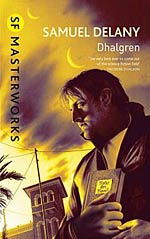
  79. Dhalgren (July 2010) - Samuel R. Delany
  80. Helliconia (August 2010) - Brian Aldiss
  81. Food of the Gods (Sept. 2010) - H.G. Wells
  82. The Body Snatchers (Oct. 2010) - Jack Finney
  83. The Female Man (Nov. 2010) - Joanna Russ
  84. Arslan (Dec. 2010) - M.J. Engh

As you can see, I’ve got my work cut out for me to finish this list.  I own my shame.   So how many have you read?  Are you trying to read them all?


Paul Thies Red Skies at Night


Call me Yankee Doodle Dandy, but I’m in a patriotic mood, with it being the Fourth of July weekend and all.

When you couple that with the recent news headline domination by Russian spy rings, it’s an ideal time to go old school and tap into some good old fashioned Cold War sci-fi from the 1950s.

So, I secured a copy of one of the hallmarks of 1950s commienoia, William Cameron Menzies’ 1953 opus Invaders from Mars.

Let me run things down for you. This film has everything that Uncle Sam would approve of in a parable about the Red scourge: Interstellar marauders that hide underground and employ mind control on hapless U.S. citizens. A cheeky young protagonist whose pluck, determination and belief in the American Way ultimately convinces the U.S. military that there just might be interstellar marauders hiding underground and attacking hapless U.S. citizens. A cornucopia of U.S. tank footage that would make General Patton wet his pants. And a giant alien baby head in a goldfish bowl with an unfortunate resemblance to Howard Dean.

All of this drama delivered in that stiff patois characteristic of overwrought 1950s science fiction.

Damn, I love America.

Boy hero David MacLean wakes up in the middle of the night during a thunder storm to witness an honest-to-gosh UFO land outside his family’s home. Dad, responding to the boy’s troubled cries, eventually goes to check things out. And then Dad checks out, as he falls into the hands of the aliens who plant a mind probe in his brain.

Dad returns home with a red sore at the base of his neck and in an angry stupor, looking like he spent a few too many nights at the Overlook Hotel. From there, things turn south as various townspeople fall prey to the aliens, including David’s mom, the police chief and an Army general. Even a little girl, Kathy Wilson, is not spared the ignominy of having her brain carjacked by the cosmic commies.

Fortunately, David is able to secure the aid of an astronomer and a beautiful health care professional. With their help, he’s able to defy logic and actually convince the military that them thar hills is loaded with alien bastards.

The military investigates and comes to the conclusion that they need to roll in a ton of tanks and start blowing things up. I tell you, there’s not much that makes me more proud as an American than hearing some gravelly voiced commander shout with full-hearted gusto, “Blast ‘em!”

Damn, I love America.

We learn through the course of action that the aliens came to Earth to destroy the nascent U.S. atomic space program by which we could send nuclear weapons to the stars. To scuttle our capabilities, the aliens sent their mind-controlled human puppets to attempt blowing up a top secret rocket; they burned down the home and attempted an assassination of one of our top scientists; and they killed several Hollywood B movie actors.

And you wonder why Ronald Reagan had it in for the commies.

The film concludes with the military rescuing the boy and the beautiful health care professional from the villainous clutches of the aliens, then blowing up the subterranean ship. We are treated to a hallucinatory montage of the film’s highlights as the boy, running from the blast area, reminisces about all the strange goings-on.

As the ship detonates, David wakes up in his bed. Was it all a dream? He goes to his parents’ room and they tell him to go back to sleep. Returning to his room, he looks out the window. And lo and behold, he sees a UFO land outside his family’s home. Eerie! But you got to love twist sci-fi endings, right?

I know you probably expect me to body slam the film for its cheesy effects (there were plenty) or its wooden characterizations (plenty of those, too). But I enjoyed it. It put me in touch with my inner John Wayne and riled me up. And I don’t mean The Searchers John Wayne, but rather Stagecoach John Wayne.

I do, however, need to ding the film on one major faux pas.

One of the scenes follows David’s mind-controlled old man as he aims to carry out a nefarious act of dastardliness. We cut to a scientist in a lab, messing around with test tubes. One of the lab flunkies comes in and passes on his condolences to the scientist for the loss of his daughter – at this point we learn the scientist is Dr. Bill Wilson, the main man behind the atomic rocket program as well as the father of the little girl who died after the aliens blew her mind-control device.

The flunkie remarks that he’s surprised to see Dr. Wilson working at the lab, given that his little girl just died, to which the good doctor remarks something along the lines of, “Yes it’s too bad, but the show must go on.”

So I’m thinking, obviously the doc is another alien-controlled sap. He must be, to be so callous and robotic. It made sense, since all the other people that the cosmic commies got their hands on turned into emotionless monsters.

But no, David’s mind-controlled dad shows up and tries to assassinate the doctor. So it became clear they weren’t working the same side.

Dr. Bill Wilson wasn’t an alien puppet. He was just some jerk with no freakin’ priorities.

I was like, really? You’ve got to be kidding. What lout heads to the office after the death of his only child? C’mon. If this guy is supposed to be some paradigm of scientific prowess, if he’s on our side, then what are we fighting for? Clearly we’re no better than the aliens or their puppets.

If that’s the best the doctor could muster emotionally, no wonder the 1960s were so generationally turbulent and rebellious. If I was a kid of that era, I’d be PO’d, too.

This obvious lack of character development aside, I think I really enjoyed the film. And like I said, any time you get the U.S. military blasting communists in the guise of space aliens, count me in.

Blast ‘em!

Damn, I love America. Happy birthday!


Older Posts